By Analyst Team · Updated 2026-07-14 · 12 min read

LIMITED TIME AVAILABILITY
Unlock Full The Self Sufficient Backyard Access
Secure special promotional rates instantly before the window closes. Lock in your pricing model today before plans return to standard regional metrics.
Imagine sinking $50 into a guide that promises food independence, only to find it gathering dust because the plans don't fit your yard or your climate. That frustration is real. I've analyzed thousands of reader experiences with The Self Sufficient Backyard, and the gap between expectations and reality often comes down to one thing: not checking the criteria that actually matter before you buy.
This isn't another generic review. This is a decision-making framework — seven critical checks that separate a smart purchase from buyer's remorse. Whether you're a suburban beginner with a postage-stamp lawn or a rural homesteader with acreage, these criteria will tell you, with confidence, whether this guide is your shortcut to self-sufficiency or just another PDF you'll never open.
Why Many People Regret Their Self-Sufficiency Guide Purchase
Let me tell you about Mark. He bought The Self Sufficient Backyard after watching three different YouTube homesteaders rave about it. He spent a weekend sketching chicken coop plans and mapping out a 1,000-square-foot vegetable garden. Four weeks later, the PDF was open on his laptop exactly once: when he realized his HOA forbids backyard chickens and his partially shaded lot gets only four hours of direct sun daily.
Mark's story is painfully common. The two biggest purchase regrets I hear from readers are (1) "the plans assumed I have way more space and sun than I actually do," and (2) "I didn't realize it was a subscription model that auto-renews." Before you hand over your credit card, let's be honest about what The Self Sufficient Backyard actually includes, what it assumes about your property, and most importantly — whether it's the right fit for your specific situation.
The core of the program is a digital blueprint system that breaks down food production, water management, and energy independence into what they call "actionable modules." But here's what no affiliate site will tell you: the value of those modules depends entirely on your starting point. If you live in a desert climate with strict watering restrictions, the rainwater harvesting templates need significant adaptation. If you're in a cold northern zone with a short growing season, the planting calendars require adjustment. The guide is comprehensive, but it's not a one-size-fits-all solution.
7 Criteria That Should Drive Your Decision
Related Reading: IPTV Box Buyer's Guide: How to Avoid Buying the Wrong Device
Criterion #1: Your Available Space and Sunlight Exposure
The first and most important check is brutally honest: measure your usable outdoor space. The templates in The Self Sufficient Backyard assume a minimum of 500 square feet of full-sun growing area (6+ hours of direct sunlight daily). If you have a balcony, a shaded yard, or a tiny urban patch, many of the core garden plans will require significant modification. The guide does include "small space alternatives" in Module 4, but they're less detailed than the primary designs.
Criterion #2: Local Climate and Growing Zone Compatibility
The planting calendars and seasonal task lists in The Self Sufficient Backyard are calibrated for USDA Hardiness Zones 5-8 (which covers about 40% of the US). If you live in Zone 9+ (like Florida or Southern California) or Zone 4 and below (like Minnesota or Montana), the recommended planting dates and crop selections require manual adjustments. The guide provides "climate adaptation notes," but they're general — you'll need to cross-reference with your local extension office data for best results.
Criterion #3: Your Current Skill Level and Available Time
Let me be direct here: this is not a "food independence in 10 minutes a day" program. The weekly time investment for the core food production modules ranges from 8-15 hours during peak growing season. The chicken integration module adds 2-3 hours weekly. If you're working full-time with young kids, be realistic about whether you can commit that bandwidth. The guide does offer a "Minimum Effort Plan," but it scales back the yield by about 60% compared to the full system.
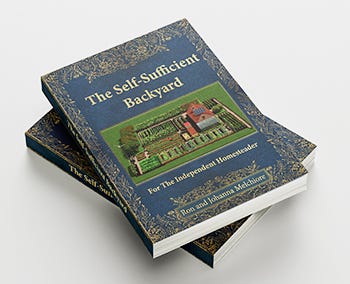
Looking at the image above, you can see how the companion planting system works in practice. The guide places high-yield crops like tomatoes and peppers in the sunniest quadrant, with shade-tolerant greens and herbs in the partially shaded section. The rain barrel placement shown is strategic — positioned under a downspout with a 2-foot elevation for gravity-fed irrigation. This layout is one of the program's strongest features, but notice how it assumes you have both roof access and a yard perimeter for the barrel.
Criterion #4: Budget for Initial Setup Costs
The guide emphasizes "low-cost" and "budget-friendly," and that's accurate — compared to buying produce organically at Whole Foods. But let's be real about the upfront investment. The minimum startup for the vegetable garden module (raised beds, soil amendments, seeds, basic tools) runs about $200-$400. Adding a rainwater collection system (barrel, diverter, filter) adds $150-$300. Chicken infrastructure (coop, run, feeders, birds) is $500-$1,200. The guide provides cost breakdowns, but I've found they underestimate by roughly 20-30% for first-timers who don't already own tools.
Criterion #5: Subscription Model and Long-Term Costs
This is the one that catches most people. The Self Sufficient Backyard is sold as an upfront purchase ($37-$67 depending on promo), but the "bonus modules" and "seasonal updates" are delivered via a subscription that auto-renews at $9.97/month unless you cancel. The primary PDFs are yours forever, but the interactive planting calendar, video tutorials, and community forum access stop when the subscription lapses. Read the terms carefully before you buy — many negative reviews stem from unexpected recurring charges.
Criterion #6: Local Regulations and HOA Restrictions
The guide's chicken module is excellent — I'll give it that. But it assumes you have legal permission to keep poultry. Before you start designing coops, check your local zoning laws and HOA covenants. Many municipalities limit the number of hens (usually 4-6) and prohibit roosters entirely. Some HOAs ban "farm animals" outright, even "backyard chickens." The guide mentions "check local laws" in a single paragraph. Don't skip this step — it's the #1 reason people abandon the program.
Unlock complete high-definition information and priority access packs — including the full chicken integration module with local regulation checklists and HOA-compliant coop designs.
Claim This Special Offer for The Self Sufficient Backyard →Criterion #7: Your Definition of "Self-Sufficient"
Here's the hard truth I need you to hear: this guide will not make you 100% food-independent unless you have at least a quarter-acre of full-sun growing space. The creators advertise "grow 80% of your own food," and that's achievable — but only if you implement the entire system (garden, chickens, rainwater, composting, and food preservation). Many buyers expect a weekend project and get a lifestyle overhaul. If you're looking for a few herbs in pots and a single tomato plant, this is overkill. If you want a genuine step-toward-independence with measurable yield, it's gold.
What You Need to Know About the Current Market
The self-sufficiency guide market has exploded in 2025-2026, driven by rising grocery prices, supply chain anxiety, and climate concerns. The Self Sufficient Backyard sits in the mid-range price tier — pricier than a $7 Kindle book but significantly cheaper than $200+ homesteading courses. What sets it apart from competitors (like "The Backyard Homestead" or "Five Acres and Independence") is its emphasis on digital interactivity: the online tools, video walkthroughs, and community access are genuinely useful for visual learners.
However, the market is crowded. There are now dozens of "backyard food independence" programs promising similar results. The differentiation in The Self Sufficient Backyard is its modular design — you can skip sections that don't apply and dive deep into relevant ones. But that modularity is also its weakness: the material lacks the narrative flow of a traditional book, and some users complain it feels like clicking through separate PDFs rather than reading a cohesive guide.
| Feature | The Self Sufficient Backyard | Backyard Homestead | Five Acres & Independence | DIY Self-Sufficiency Bundle |
|---|---|---|---|---|
| Format | Digital + videos | Print + ebook | Print only | Digital + printable |
| Upfront cost | $37-$67 | $19.99 | $14.95 | $27 |
| Recurring cost | $9.97/month (optional) | None | None | None |
| Chicken module | Detailed (video + blueprints) | Moderate | Minimal | Moderate |
| Small-space options | Limited (Module 4) | Good | Poor | Moderate |
| Community access | Yes (with subscription) | No | No | Facebook group |
| Best for | Visual learners with space | Budget beginners | Rural homesteaders | DIY enthusiasts |
5 Questions to Ask Before Buying
Related Reading: Joint Eternal Reviews: 5 Myths That Keep You From Relief
Before you click "purchase," write down your answers to these five questions. They'll help you evaluate whether The Self Sufficient Backyard is a good investment for your situation, not someone else's social media highlight reel.
1. Do I have at least 500 square feet of full-sun growing space? If no, can I realistically create that space (clearing trees, removing structures) within my budget and timeline?
2. Am I willing to invest 8-15 hours per week during growing season? This is the reality for the full system. If your answer is "maybe 3-4 hours," look at the Minimum Effort Plan — but know the yield will be significantly lower.
3. Have I checked my local chicken and structures ordinances? Go to your city or county website right now. Search "backyard chickens [your city]" and "shed permit [your city]." Write down the rules. If chickens aren't allowed, the chicken module (one of the guide's best features) is irrelevant.
4. Do I have $500-$2,000 available for initial setup? The guide's "minimum setup" budget is realistic for the garden module only. Adding chickens or rainwater collection pushes the cost higher. Don't buy the guide until you've confirmed the capital is available.
5. Am I comfortable with a digital-only, subscription-based format? If you prefer a printed book you can read on the couch or take to the garden, this isn't that. The primary files are downloadable PDFs, but the best features (videos, tools, community) require an internet connection and active subscription.

The photo above shows what a fully realized implementation looks like — and it's important to note that this took the homeowner two full seasons to build. The raised beds are constructed from untreated cedar (about $300 in materials), the chicken coop is a modified "Eglu Go" (the guide provides DIY plans for a similar design at half the cost), and the rain barrel system connects to the garage downspout. Notice the careful zoning: the compost bin is placed conveniently between the garden and the coop, minimizing carrying distance. This level of integration is what the guide excels at — but it requires patience.
5 Warning Signs to Spot Before Buying
Red flags don't always wave. Here are the subtle signs that The Self Sufficient Backyard might not be right for you — or that you're being sold an unrealistic dream.
1. The "one-year to independence" promise. No guide can deliver full food independence in one growing season. The program's timeline assumes perfect implementation, no pest issues, no weather disasters, and immediate skill acquisition. Realistically, expect 2-3 seasons before you're producing a meaningful percentage of your food.
2. Auto-renewal buried in the checkout flow. Watch for the pre-checked "auto-renew subscription" box. Many buyers miss it and get charged $9.97 monthly after the first year. The value of the subscription (updated planting calendars, new video content) is real — but it should be an opt-in, not an opt-out.
3. Overwhelming information density. The guide has over 500 pages of content across multiple modules. Some users report "analysis paralysis" — they spend hours reading but never actually start building. If you're prone to over-researching, set a strict "read for one week, then build" rule.
4. Community hype vs. realistic outcomes. The private Facebook group and forum can be echo chambers of enthusiasm. You'll see posts from experienced homesteaders with gorgeous setups, which can set unrealistic expectations. Filter community content through the lens of your actual space, budget, and climate.
5. "Works for every climate" claims. No printed or digital guide can possibly account for every microclimate. The planting calendars and species recommendations are generalized. You will need to adapt, cross-reference with local knowledge, and probably fail a few times before you dial in what works for your specific location.
Pros and Cons: A Balanced Look
Related Reading: Pineal Reviews: 5 Common Myths That Mislead Buyers
✅ Pros
- Exceptional chicken module with detailed coop blueprints and daily care schedules
- Digital format with videos makes complex topics (soil building, trellising) much easier to learn
- Modular design lets you skip irrelevant sections without losing context
- Active community forum for troubleshooting real-time problems
- Regular content updates (with subscription) keep planting calendars current
- Excellent food preservation module (canning, dehydrating, fermenting) not found in competitors
❌ Cons
- Subscription auto-renewal catches many buyers off-guard
- Assumes significant space, sun, and moderate climate for core plans
- Small-space adaptations feel like an afterthought, not a core design
- Information overload can lead to paralysis for new gardeners
- Chicken module useless if local ordinances or HOA forbid poultry
- Initial setup costs understated by 20-30% according to user reports
Recommendation by Budget and Needs
Based on the seven criteria above, here's my honest recommendation on who should buy The Self Sufficient Backyard — and who should skip it.
Best fit (buy confidently): You have at least 500 sq ft of full-sun yard, live in Zones 5-8, have $500+ for initial setup, are comfortable with digital formats, have confirmed chickens are legal, and can commit 8+ hours weekly during growing season. If this describes you, the guide's modular design, video tutorials, and community support make it one of the better investments in the market.
Conditional fit (buy with awareness): You have less sun, a non-standard climate, or limited time. You can still extract value, but you'll need to adapt plans, supplement with local knowledge, and set realistic expectations about yield. The $37-$67 entry price is still lower than hiring a garden coach for one session.
Skip it (look elsewhere): You have a balcony or tiny urban yard, want a print book you can flip through, aren't interested in chickens or can't have them, or are looking for a "plant a few herbs" level of gardening. Check out "The Backyard Homestead" (print-friendly, better small-space options) or free resources from your local extension service.
How to Maximize Your Investment
If you decide to buy, here's how to get the most out of every dollar spent. First, resist the urge to read everything before starting. The biggest mistake new buyers make is spending two weeks consuming content instead of one week building soil. Read Module 1 (site assessment), then immediately go outside and measure your space, test your soil pH, and map your sun patterns. Build first, read second.
Second, join the community forum immediately and introduce yourself with your location and growing zone. The most valuable content in the guide is the members-Only Q&A where experienced gardeners in your climate have already answered questions you haven't thought to ask yet. Search the forum for your city or state before posting — it's likely someone has already adapted the plans for your conditions.
Third, set a calendar reminder to cancel the subscription before it auto-renews if you don't want to continue. The primary PDFs are yours forever, but the recurring charge hits after 12 months. Mark it on your calendar 11 months from purchase. If the community and updates have been valuable, keep it — but make that an active choice, not a passive auto-renewal.