By Analyst Team · Updated 2026-07-15 · 12 min read
You’ve heard the buzz — cut the cable, stream everything, pay half the price. But the big question remains: how does IPTV work, and is it really that simple? In this complete guide, we break down the technology, the setup, the legal concerns, and exactly how you can start watching live TV over the internet today.
Internet Protocol Television (IPTV) delivers television content through your internet connection instead of traditional satellite or cable formats. Unlike Netflix or YouTube, which stream on-demand content from a central library, IPTV can deliver live television channels in real time — just like broadcast TV, but over the web. Whether you’re asking how does IPTV work on smart TV devices or wondering about the best IPTV service for live sports, this guide covers it all.
LIMITED TIME AVAILABILITY
Unlock Full how does iptv work Access
Unlock complete high-definition information and priority access packs. Lock in your pricing model today before plans return to standard regional metrics.
What is IPTV Exactly?
IPTV stands for Internet Protocol Television. Instead of receiving broadcast signals through a coaxial cable or satellite dish, your television content is delivered as data packets over the same internet connection you use for browsing and streaming. The video content is encoded, compressed, and sent to your device using IP protocols — the same language the entire internet speaks.
There are three main types of IPTV services:
- Live Television: Broadcasts channels in real time — think sports events, news, and live shows.
- Video on Demand (VOD): A library of movies and shows you can play whenever you want.
- Time-Shifted Media: Catch-up TV that lets you watch a show that aired hours or days ago.
How IPTV Differs from Streaming Services
Netflix, Hulu, and Disney+ are over-the-top (OTT) services that deliver on-demand content through the open internet. IPTV, on the other hand, often uses a private, managed network to deliver content — especially for live channels. This distinction matters because IPTV can offer better stability for live events, which is why many cord-cutters search for the best IPTV service for live sports.
How Does IPTV Work? Step by Step
Understanding how does IPTV work on a technical level helps you troubleshoot issues and choose the right provider. Here’s the journey a TV signal takes from the broadcaster to your screen:
- Content Acquisition: The IPTV provider sources live channels and on-demand movies from broadcasters and content distributors. This includes everything from ESPN and CNN to international channels.
- Encoding and Compression: Raw video signals are converted into digital packets using codecs like H.264 or H.265. Compression reduces file size without sacrificing quality — crucial for smooth streaming.
- Transmission via IP Networks: Compressed packets travel through the internet to a dedicated server. IPTV providers use Content Delivery Networks (CDNs) to reduce buffering.
- Middleware Management: The provider’s middleware organizes channel lists, user authentication, and Electronic Program Guides (EPG). This is what you see as a menu on your screen.
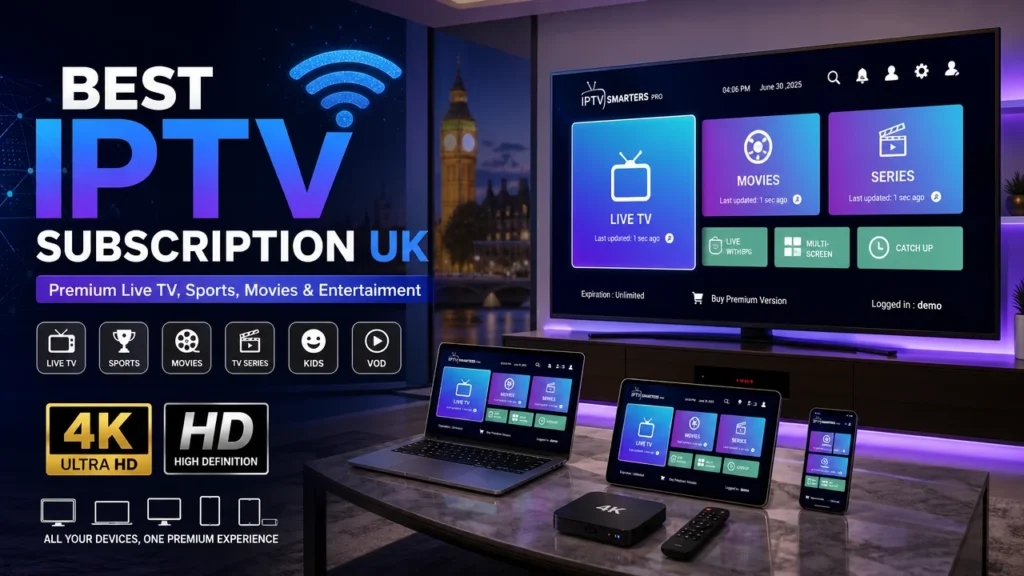
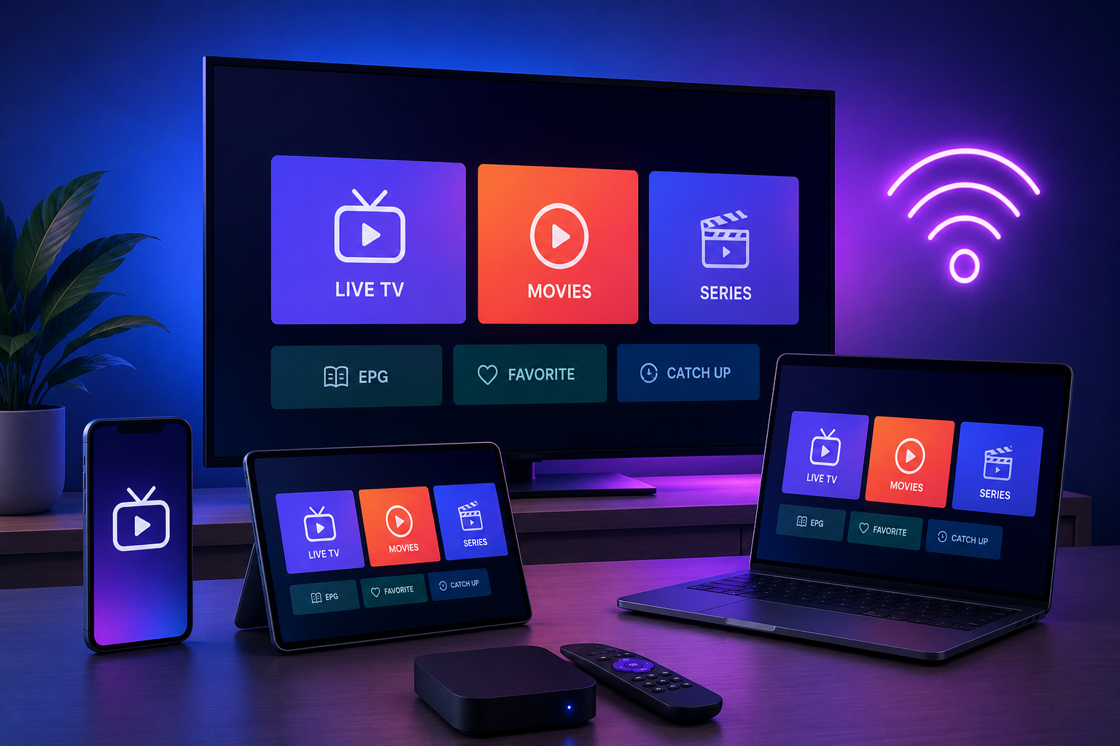
- Delivery to Your Device: Your device — a smart TV, Amazon FireStick, Android box, or even a phone — receives the packets. An IPTV app (like TiviMate, IPTV Smarters, or a provider’s proprietary app) decodes and plays the stream.
When you ask how to set up IPTV on FireStick, you’re essentially configuring step 4 and 5 — installing middleware and an app that connects to the provider’s server.
Concrete Benefits of IPTV for Real Users
Why are millions switching from cable to IPTV each year? These are the real-world advantages:
- Lower Cost: A monthly IPTV subscription typically costs $10–$20, compared to $100+ for cable bundles.
- Massive Channel Selection: Access 10,000+ channels from dozens of countries — including premium sports, movies, and news.
- Multi-Device Support: Watch on your TV, tablet, phone, or laptop simultaneously. No extra set-top box fees.
- On-Demand Libraries: Many providers include thousands of movies and series alongside live channels.
- Global Reach: Travel abroad and still watch your home country’s channels.
Secure special promotional rates instantly before the window closes.
Activate Your how does iptv work Subscription Now →Honest Limitations You Must Know
No technology is perfect. Before you buy, consider these drawbacks:
Pros
- 70% cheaper than cable
- Watch on any screen
- Thousands of channels
- No long-term contracts
- Record live TV (DVR)
Cons
- Requires stable 25+ Mbps
- Buffering on weak WiFi
- Legal gray area in some regions
- Provider reliability varies
- VPN often needed for privacy
The most common complaint is IPTV buffering. This happens when your internet speed dips or the provider’s server is overloaded. A dedicated IPTV buffering fix guide is essential — often involving wired Ethernet connections, reducing device load, or switching to a premium provider with better server infrastructure.
IPTV vs Cable: Which is Better?
Who is IPTV Best For?
IPTV isn’t for everyone, but it’s perfect for these user profiles:
- The Sports Fanatic: You want every NFL, NBA, UFC, and Premier League match without paying $150/month for cable sports packages.
- The International Viewer: You need channels from India, the Philippines, the Middle East, or Latin America that local cable doesn’t carry.
- The Budget-Conscious Cutter: You’re tired of rising cable bills and want a no-contract alternative that costs less than a pizza dinner per month.
- The Traveler: You spend time abroad and want to keep watching your home country’s news and shows.
- The Tech Enthusiast: You enjoy setting up devices, tweaking settings, and optimizing your home streaming setup.
How to Get Started with IPTV: 8 Practical Steps
Ready to begin? Follow this numbered guide:
- Check Your Internet Speed: Run a speed test. You need at least 25 Mbps for 4K streaming and 10 Mbps for HD. Use wired Ethernet when possible.
- Choose a Reliable IPTV Provider: Read IPTV review Reddit 2025 threads and community forums. Look for providers with 24/7 support, free trials, and multiple payment options.
- Get a Compatible Device: Most people use Amazon FireStick, Android TV boxes, or built-in smart TV apps. If you’re wondering how does IPTV work on smart TV — most Samsung, LG, and Sony TVs support IPTV apps directly.
- Install an IPTV App: TiviMate, IPTV Smarters Pro, or OTT Navigator are popular choices. These apps let you load your provider’s playlist.
- Enter Your Subscription Details: Your provider gives an M3U URL or Xtream Codes. Paste these into your IPTV app.
- Set Up the EPG (Electronic Program Guide): This gives you a TV guide-like interface showing what’s on now and later.
- Optimize for Buffering: Use a VPN if your ISP throttles streaming. Adjust buffer settings in your app. Close background apps.
- Test and Enjoy: Browse channels, check favorites, and explore the VOD library.
Final Subscription Window:
Main Offer Today →Affiliate Disclosure: Clicking this secure link verified by our network supports our team through standard partnership terms at zero extra cost to your invoice.
Frequently Asked Questions
How does IPTV work on smart TV without a separate box?
Most modern smart TVs from Samsung, LG, Sony, and Hisense have native IPTV apps available in their app stores. You simply download an app like IPTV Smarters or Smart IPTV, enter your provider’s M3U playlist URL or Xtream Codes, and start watching. No FireStick or external box is needed — the TV’s processor handles the decoding directly.
Is IPTV legal in the US if I pay for a subscription?
The legality depends entirely on the source. IPTV technology itself is legal — many hospitals and hotels use it. However, many low-cost IPTV providers stream copyrighted content without authorization. Is IPTV legal in the US for end users? Watching unauthorized streams is a legal gray area. Always choose verified providers that only offer licensed content to stay safe.
What is the best IPTV service for live sports in 2025?
The best IPTV service for live sports offers dedicated sports servers, low latency, and comprehensive coverage of NFL, NBA, UFC, Premier League, and Champions League. Look for providers that offer free trials specifically for sports channels, and check IPTV review Reddit 2025 threads for real user feedback on sports streaming performance.
How to set up IPTV on FireStick step by step?
To set up IPTV on FireStick, enable “Apps from Unknown Sources” in Developer Options. Download the Downloader app, type the URL for an IPTV app like TiviMate or IPTV Smarters Pro, install it, then enter your subscription details from your provider. A VPN is recommended before opening the app for privacy.
IPTV vs cable which is better for picture quality?
When asking IPTV vs cable which is better for video quality, IPTV wins at the high end — it supports 4K HDR and 60fps streams. However, cable is more consistent because it doesn’t depend on your home internet. If you have reliable 50+ Mbps internet, IPTV offers superior picture quality. If your internet is unstable, cable wins on reliability.
Where to buy reliable IPTV subscription without getting scammed?
To where to buy reliable IPTV subscription, avoid Telegram-only sellers and random Facebook ads. Look for providers with a website, customer support via WhatsApp or live chat, multiple payment options (including PayPal or credit card), and trial periods. Check forums like Trustpilot and Reddit for verified user reviews before purchasing.
IPTV buffering fix guide — what actually works?
An effective IPTV buffering fix guide starts with upgrading to wired Ethernet instead of WiFi. Next, reduce resolution to 1080p in the app settings. Use a VPN if your ISP throttles streaming traffic. Clear the app cache weekly. Finally, switch to a premium provider with dedicated servers — cheap $10/year services almost always buffer.
What do the latest IPTV review Reddit 2025 threads say?
Searching IPTV review Reddit 2025 reveals that users are increasingly focused on provider stability, customer support response times, and 4K channel availability. The top-rated providers consistently offer 7-day trials, EPG support, and multiple simultaneous connections. Users warned against providers that disappear after payment — always use a trial first.