By Analyst Team · Updated 2026-07-15 · 18 min read
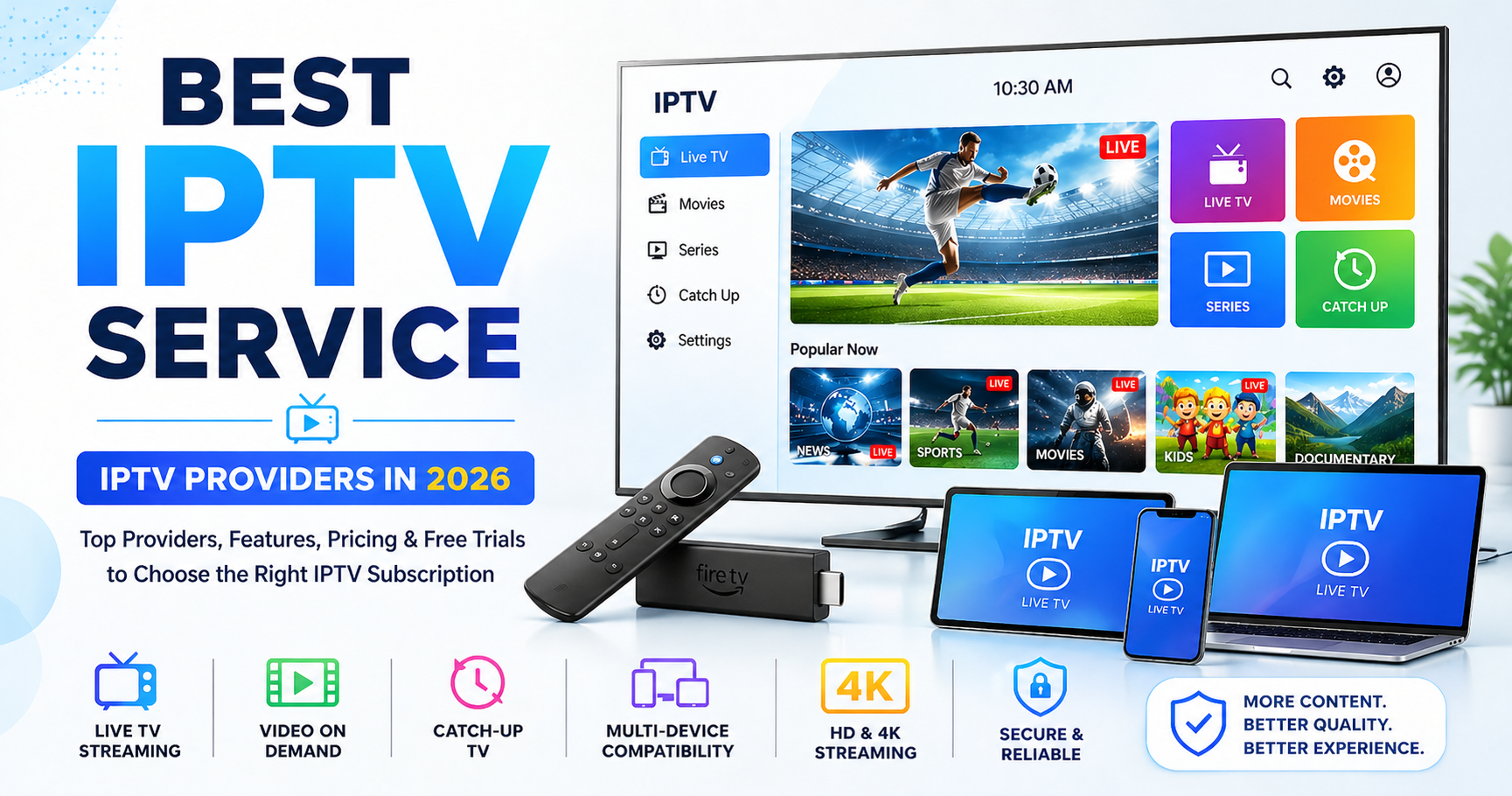
If you have ever wondered how people stream hundreds of live TV channels, catch up on missed episodes, and watch international content from any device without a satellite dish, you are looking at an IPTV service. The shift from traditional cable to internet-based television is accelerating, and understanding how an IPTV service works, what it costs, and whether it fits your viewing habits is essential before you subscribe. This complete guide answers every question you have — from setup to troubleshooting to finding the right provider for your needs.
LIMITED TIME AVAILABILITY
Unlock Full IPTV Service Access
Secure special promotional rates instantly before the window closes. Lock in your pricing model today before plans return to standard regional metrics.
What Is an IPTV Service Exactly?
IPTV stands for Internet Protocol Television. Instead of receiving broadcast signals through a cable wire, satellite dish, or antenna, an IPTV service delivers television content over your internet connection using the same technology that powers your web browsing and streaming apps. The content is broken into small data packets, sent over your network, and reassembled in real time on your screen.
Unlike on-demand streaming platforms like Netflix or Hulu, which only offer pre-recorded content libraries, most IPTV services combine live TV channels, video-on-demand (VOD) libraries, and catch-up TV features that let you watch programs that aired hours or days earlier. This hybrid approach makes it a direct competitor to traditional cable and satellite packages.
Key entities related to IPTV include M3U playlists (simple text files containing channel URLs), IPTV player apps like TiviMate, IPTV Smarters, and Perfect Player, middleware platforms that providers use to manage subscriber access, and CDNs (Content Delivery Networks) that optimize the stream to reduce buffering. Understanding these components helps you choose a reliable service and get the most out of it.
How an IPTV Service Works Step by Step
The process behind an IPTV service might seem complex, but for the user, it is remarkably simple. Here is exactly what happens when you press play on a live channel:
- You connect your device — a smart TV, Firestick, Android box, smartphone, tablet, or computer — to your home internet network.
- You install an IPTV player app that reads M3U playlist links or uses Xtream Codes API credentials supplied by your provider.
- The player sends a request to the provider's server, which authenticates your subscription and locates the requested channel or VOD file.
- Video packets travel across the internet via CDN servers that cache content close to your geographic location, minimizing latency.
- Your player decodes the packets using protocols like HLS (HTTP Live Streaming) or MPEG-DASH and displays the video on your screen.
All of this happens in under two seconds on a well-configured service. The quality of your experience depends on three factors: your internet speed (minimum 25 Mbps for HD, 50 Mbps for 4K), the provider's server capacity, and the efficiency of your player app. An IPTV service that invests in robust CDN infrastructure automatically delivers smoother playback with less buffering.
Unlock complete high-definition information and priority access packs for the best IPTV experience.
Claim This Special Offer for IPTV Service →Concrete Benefits of Using an IPTV Service
Thousands of cord-cutters switch to an IPTV service every month for good reason. The benefits go beyond just saving money, though that is a big part of it:
- Massive channel selection — A single subscription can include 10,000+ live channels covering sports, news, entertainment, kids programming, and international content from every continent.
- Catch-up TV and time-shifting — Missed your favorite show? With catch-up TV built into many IPTV plans, you can rewind and watch programs that aired up to 7 days earlier.
- Device flexibility — Watch on your smart TV in the living room, your Firestick in the bedroom, your phone on the commute, and your laptop at work, all from one account.
- Video-on-demand libraries — Thousands of movies and full TV series are included at no extra cost, rivaling paid streaming services.
- Affordable pricing — Monthly subscriptions often cost between $10 and $20, compared to $80 to $150 for typical cable packages.
- No long-term contracts — Most IPTV services offer month-to-month billing with no cancellation fees, letting you test the service risk-free.
Honest Limitations You Should Know
No technology is perfect, and IPTV comes with its own set of drawbacks. Being aware of these will help you set realistic expectations and choose the right provider:
Pros
- Lower cost than cable or satellite
- Thousands of international channels
- Multi-device compatibility
- Built-in VOD and catch-up TV
- No annual contracts required
- EPG (Electronic Program Guide) included
Cons
- Dependent on stable high-speed internet
- Some services lack legal licensing
- Buffering possible during peak hours
- Requires setup with third-party apps
- Channel reliability varies by provider
- Less mainstream support for refunds
To minimize limitations, always test a provider with a trial or one-month plan before committing to a longer subscription. The best IPTV service for you will have transparent policies, responsive customer support, and a reliable server network that minimizes downtime.
IPTV Service vs. Traditional TV — Comparison Table
To help you visualize the differences between an IPTV service and traditional television delivery methods, here is a direct comparison across the most important criteria:
As you can see, an IPTV service wins on cost, channel count, and flexibility. However, cable and satellite offer reliability and dedicated hardware that does not depend on your home internet connection.

Who Is an IPTV Service Best For?
An IPTV service does not suit everyone equally. Here are the user profiles that benefit most:
- International viewers — If you miss live TV from your home country, IPTV delivers channels in Arabic, Hindi, Spanish, Portuguese, French, Filipino, Bengali, Urdu, and dozens of other languages.
- Sports fans — Watch Premier League, NFL, NBA, UFC, cricket, Formula 1, and niche sports from every league globally without paying for expensive sports packages.
- Cord-cutters on a budget — Replace a $120 cable bill with a $15 IPTV subscription and still get more channels than you had before.
- Travelers and digital nomads — As long as you have internet access, your IPTV subscription works anywhere in the world.
- Tech-savvy users — People comfortable with installing apps, configuring playlists, and troubleshooting minor connection issues will get maximum value.
If you prefer a plug-and-play experience, dislike technical setup, or have slow internet (under 15 Mbps), a traditional TV service or standard streaming subscription may be a better fit for now.
How to Get Started with an IPTV Service — 7 Practical Steps
Ready to set up your own IPTV service? Follow these numbered steps to get streaming in under 30 minutes:
- Check your internet speed — Run a speed test on the device you plan to use. You need at least 25 Mbps for reliable HD streaming and 50 Mbps for 4K content. Use a wired Ethernet connection when possible for the best stability.
- Choose your device — The most popular option is the Amazon Firestick 4K, but any Android TV box, smart TV with Android OS, smartphone, tablet, or computer works. Apple TV users can use apps like IPTVX.
- Select a reputable IPTV service — Look for reviews on Reddit in communities like r/IPTV and r/IPTVReviews. Prioritize providers that offer a 24-hour free trial or a 7-day money-back guarantee so you can test channel quality and buffering levels.
- Install an IPTV player app — For Firestick, download TiviMate or IPTV Smarters Pro from the Amazon App Store. For Android devices, use the same apps or Perfect Player. On iOS, use GSE Smart IPTV or IPTVX.
- Enter your subscription details — Your provider will send you either an M3U playlist URL or Xtream Codes credentials. Open your player app, navigate to settings, and paste the information exactly as provided.
- Configure the Electronic Program Guide (EPG) — An EPG adds channel names, program schedules, and descriptions. Most providers supply an EPG URL that you can link in your player app settings.
- Start testing channels — Scan through different categories, test channels from different countries, and check catch-up TV and VOD sections to verify everything works. If you encounter buffering, try switching to a lower resolution in the player settings or connecting via VPN.
Once these steps are complete, your IPTV service is live and ready for daily use.
Frequently Asked Questions
What is the best IPTV service for Firestick in 2025?
The best IPTV service for Firestick prioritizes smooth performance with a lightweight app like TiviMate, a clean EPG, stable 4K streams, and catch-up TV. Providers that offer dedicated Firestick setup guides and Xtream Codes API integration tend to perform exceptionally well on Amazon's device. Always check recent Reddit reviews and test a trial before subscribing, as service quality changes frequently.
How do I set up an IPTV service on a smart TV?
If your smart TV runs Android TV or webOS (LG), you can install IPTV player apps directly from the TV's app store. For Samsung Tizen TVs, you may need to use Smart IPTV or SS IPTV app. Enter the M3U URL or Xtream Codes provided by your IPTV subscription into the app settings. You can also cast from a smartphone using apps like GSE Smart IPTV for a wireless setup.
Where can I find honest IPTV service reviews on Reddit?
Subreddits like r/IPTV, r/IPTVReviews, and r/FireStickHacks are active communities where users share real experiences with various providers. Look for detailed reviews that mention specific channel quality, buffering frequency, customer support response times, and pricing transparency. Be cautious of posts that aggressively promote a single service as they may be paid advertisements disguised as reviews.
Where can I buy a reliable IPTV service without being scammed?
To buy a reliable IPTV service, always use providers that accept PayPal or credit cards for buyer protection. Avoid services that only accept cryptocurrency or wire transfers. Look for established providers with at least six months of positive reviews on multiple platforms. Request a free trial or a 24-hour test line first. This allows you to verify stream quality and channel availability before paying for a full month or year.
Is there an affordable IPTV service with catch-up TV?
Yes, many affordable IPTV services between $10 and $15 per month include catch-up TV features. Catch-up TV lets you watch programs that aired in the previous 3 to 7 days, similar to a network's streaming portal. When comparing providers, check how many channels in your preferred package support catch-up, as it is often limited to popular channels from the US, UK, and Canada rather than every international channel in the lineup.
Which IPTV service offers the most international channels?
The IPTV services with the largest international channel selection typically cover 40 to 60 countries, including India, Pakistan, Bangladesh, Philippines, Brazil, Mexico, Nigeria, Egypt, Turkey, Poland, Russia, and across the Middle East. Providers that specifically market to expat communities tend to invest heavily in diverse content. Always check the channel list before subscribing, as some services exaggerate their international catalog.
What is the best IPTV service with no buffering?
No IPTV service can guarantee zero buffering because performance depends on your internet connection, network congestion, and server load. However, the best IPTV services minimize buffering by using multiple CDN servers, load balancing, and adaptive bitrate streaming. Look for providers that publish their server infrastructure details and offer premium plans with dedicated channels specifically optimized for 4K and sports content that experiences less buffering.
IPTV service monthly subscription vs yearly — which is better?
A monthly subscription is better for new users who want to test the service quality, switch providers if needed,