By Analyst Team · Updated 2026-07-11 · 12 min read
You've likely heard the term what is iptv tv thrown around in cord-cutting conversations, but the real question is: can it actually replace your cable subscription without the headaches? The short answer is yes — and millions of households worldwide have already made the switch. This guide walks you through everything from the technical fundamentals to practical setup steps, so you can decide with confidence.
What Is IPTV TV Exactly?
IPTV stands for Internet Protocol Television. Unlike traditional cable or satellite TV that broadcasts signals through radio waves or coaxial cables, IPTV delivers television content over your internet connection using the same IP protocol that powers the web. Think of it as watching TV the same way you stream Netflix — but for live channels, sports, and on-demand programming.
The core difference lies in how the content reaches you. Cable TV pushes every channel simultaneously to your home, whether you watch them or not. IPTV, on the other hand, only sends the specific channel or program you request. This makes it far more bandwidth-efficient and opens the door to features like pause-live-TV, catch-up viewing, and multi-device streaming.
When people search for what is iptv tv, they're typically looking at two categories: legitimate licensed services (like Hulu + Live TV or Sling TV) and unverified third-party providers that offer massive channel lineups at steep discounts. This guide covers both, with a focus on helping you understand the landscape before you commit.
LIMITED TIME AVAILABILITY
Unlock Full what is iptv tv Access
Secure special promotional rates instantly before the window closes. Lock in your pricing model today before plans return to standard regional metrics.
How Does IPTV Work? A Step-by-Step Breakdown
Understanding how does iptv work is simpler than most people expect. The process involves four key components working together seamlessly:
Step 1: Content Acquisition
IPTV providers acquire live television streams from various sources — satellite feeds, terrestrial broadcasts, or direct licensing agreements with broadcasters. These raw feeds are encoded into digital formats suitable for internet delivery, typically using codecs like H.264 or the newer H.265 (HEVC) for 4K content.
Step 2: Encoding and Transcoding
The raw video is compressed and converted into IP-friendly streams. This is where the provider determines video quality options — 720p, 1080p, or 4K — and creates multiple bitrate versions so your device can automatically select the best quality based on your internet speed.
Step 3: Content Delivery Network (CDN)
The encoded streams are pushed to servers distributed across the globe. When you select a channel, your device connects to the nearest server, minimizing buffering and latency. This architecture is why a best iptv service for firestick can deliver smooth 4K streams even if the provider's main server is on another continent.
Step 4: Client-Side Decoding
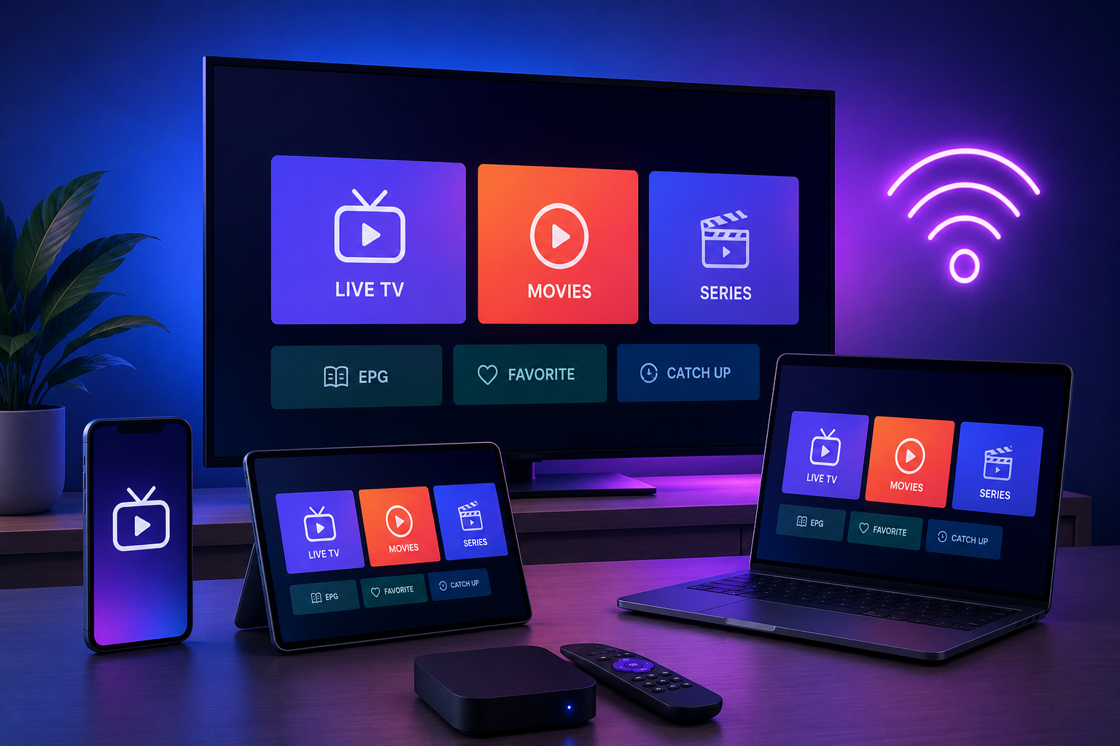
Your device — whether it's a smart TV, Firestick, Android box, or smartphone — receives the encrypted stream and decodes it in real-time using an IPTV player app like TiviMate, IPTV Smarters, or VLC Media Player. The app also handles the electronic program guide (EPG), giving you the familiar channel-surfing experience.
Unlock complete high-definition information and priority access packs.
Claim This Special Offer for what is iptv tv →Concrete Benefits of Switching to IPTV
The shift from traditional cable to IPTV isn't just about saving money — though that's a major factor. Here are the tangible advantages users report most frequently:
- Cost savings of 60-80% — Average cable bills in the US hover around $120/month. A quality IPTV subscription typically runs $10-20/month for comparable channel counts.
- Watch on any device — Your subscription works on your TV, phone, tablet, laptop, and even gaming consoles. No additional set-top box rental fees.
- Massive channel selection — Many providers offer 10,000+ channels covering every country and language imaginable, including niche content traditional cable ignores.
- Catch-up and VOD libraries — Most IPTV services include movies and TV series on demand, often updated weekly with new releases.
- No contracts or cancellation fees — Most IPTV providers operate on monthly subscriptions. You can cancel anytime without penalty.
Honest Limitations You Must Consider
No technology is perfect, and what is iptv tv has its fair share of drawbacks that responsible reviews should acknowledge:
Pros
- Dramatically lower monthly costs
- Access to global channel lineups
- Works on multiple devices simultaneously
- No long-term contracts required
- Advanced features like pause, rewind, record
Cons
- Requires stable internet (25+ Mbps)
- Some providers operate in legal gray areas
- Reliability varies by provider and region
- Customer support can be inconsistent
- Service may shut down without notice
IPTV vs Cable TV: Head-to-Head Comparison
If you're debating iptv vs cable tv, this comparison table breaks down the critical differences across every major category:
| Feature | IPTV | Cable TV |
|---|---|---|
| Monthly Cost | $10 – $25 | $80 – $150+ |
| Channel Count | 5,000 – 20,000+ | 150 – 300 |
| Device Support | Unlimited devices (phones, tablets, TVs, laptops) | Limited to rented set-top boxes |
| Video Quality | HD, Full HD, 4K (depends on internet speed) | HD, limited 4K on select channels |
| Contract Required | No — month-to-month | Often 1-2 year commitment |
| Reliability | Variable; dependent on provider uptime | Very reliable; weather-resistant |
| Catch-up / On-Demand | Included with most subscriptions | Additional cost for DVR service |
Who Is IPTV Best Suited For?
Based on thousands of user experiences documented across iptv review reddit threads and consumer forums, these profiles benefit most from switching to IPTV:
- Cord-cutters on a budget — If your current cable bill makes you wince every month, IPTV offers the same experience for a fraction of the price.
- International viewers — Expatriates and multilingual households who want channels from their home country without paying for expensive international cable packages.
- Sports enthusiasts — Fans who follow multiple leagues across different countries can access every game without needing multiple sports streaming subscriptions.
- Tech-savvy users — People comfortable with installing apps, configuring playlists, and troubleshooting minor connection issues will get the most out of IPTV.
- Travelers and digital nomads — Your subscription travels with you. Connect to Wi-Fi anywhere in the world and access your home channels instantly.
How to Get Started with IPTV: 7 Practical Steps
If you're ready to try IPTV yourself, follow this straightforward process that works for most devices including Firestick, Android TV, and smart TVs:
- Check your internet speed — Run a speed test. You need at least 25 Mbps for stable HD streaming and 50 Mbps for 4K. Wired Ethernet connections are always preferable to Wi-Fi for reliability.
- Research legal iptv providers — Start with licensed services like Hulu + Live TV, YouTube TV, or Sling TV. If you explore third-party options, read recent reviews and avoid providers with no payment protection.
- Choose your device — The best iptv service for firestick will offer a dedicated app or M3U playlist URL. Amazon Firestick, Nvidia Shield, and Android TVs are the most popular choices for their ease of setup.
- Install an IPTV player app — Download TiviMate (Firestick), IPTV Smarters (all platforms), or VLC Media Player (PC/Mac). These apps decode the streams and display the channel guide.
- Enter your subscription details — Most providers give you either an M3U URL (a playlist link) or an Xtream Codes API login. Enter this in your player app. If you're asking where to buy iptv subscription, avoid sellers on social media — use dedicated forums or verified resellers.
- Load the Electronic Program Guide (EPG) — Many IPTV apps can auto-download EPG data so you see what's playing now and next. This makes the experience feel exactly like cable TV.
- Test and troubleshoot — Watch for 30 minutes during peak evening hours (8-11 PM local time) to evaluate buffering and channel stability. Contact support if you experience persistent issues.
Final Subscription Window:
Get Access Now Today →Affiliate Disclosure: Clicking this secure link verified by our network supports our team through standard partnership terms at zero extra cost to your invoice.
Frequently Asked Questions
Is IPTV legal to use in the United States?
The legality of IPTV depends entirely on the provider. Licensed services like YouTube TV, Hulu + Live TV, and Sling TV are fully legal. Unlicensed third-party providers that stream copyrighted content without permission operate in a legal gray area. Using such services could potentially expose you to legal liability, though enforcement against individual consumers is extremely rare. Always research legal iptv providers before subscribing.
What internet speed do I need for IPTV?
For stable HD streaming (720p-1080p), you need a minimum of 25 Mbps download speed. For 4K content, aim for 50 Mbps or higher. More important than raw speed is connection stability — a wired Ethernet connection will outperform Wi-Fi every time. If you're streaming on multiple devices simultaneously, add 15 Mbps per additional stream. This is crucial when comparing iptv vs cable tv because cable doesn't depend on your internet connection at all.
What is the best IPTV service for Firestick in 2026?
The best iptv service for firestick depends on your specific needs, but top-rated options include Beast TV (8,000+ channels, good EPG), Sapphire Secure (strong VOD library), and King IPTV (excellent sports coverage). Always test with a trial subscription first — legitimate providers offer 24-48 hour free trials. Check recent iptv review reddit threads for current user experiences, as provider quality fluctuates frequently.
Can I watch local channels like NBC, ABC, and CBS on IPTV?
Yes, most comprehensive IPTV subscriptions include major US networks in their channel lineups. However, local affiliate stations (specific to your city) may not be available unless the provider specifically sources them. For reliable local channels, consider combining IPTV with an over-the-air antenna — many users report this as the ideal setup for getting both national and hyper-local content without paying cable prices.
Where to buy IPTV subscription safely without getting scammed?
When researching where to buy iptv subscription safely, follow these guidelines: use payment methods that offer buyer protection (credit cards or PayPal), read reviews on independent forums like Reddit or Trustpilot, start with a 1-month trial never a yearly plan, and avoid providers that only accept cryptocurrency or wire transfers. The safest approach is to begin with a licensed provider before exploring unverified options.
What is the difference between IPTV and regular streaming services like Netflix?
The fundamental difference is live content. Netflix, Hulu (on-demand), and Disney+ offer pre-recorded shows and movies that you select from a catalog. IPTV delivers live television channels in real-time, just like cable or satellite. Most IPTV services also include Video on Demand (VOD) libraries, but their primary function is live channel delivery including news, sports, and events that streaming services don't offer in real-time.
How to set up IPTV on smart TV without a Firestick?
To how to set up iptv on smart tv without additional hardware, first check if your TV runs on Android TV, webOS (LG), or Tizen (Samsung). For Android TVs, download IPTV Smarters or TiviMate directly from the Google Play Store. For LG and Samsung TVs, you'll need to use the built-in web browser to access a web-based IPTV player, or purchase a Smart IPTV app from the LG Content Store. Note that non-Android smart TVs have limited IPTV app availability.
Can I get an IPTV channels list USA with prices before subscribing?
Most legitimate providers publish their iptv channels list usa on their websites or share it upon request. Typical USA-focused packages include 150-300 American channels including local networks, news (CNN, Fox News, MSNBC), sports (ESPN, Fox Sports, NBC Sports), entertainment (HBO, Showtime, Starz), and international channels. Pricing for USA-centric plans ranges from $10-20/month depending on channel count and video quality (HD vs 4K).
Final Verdict: Is IPTV Right for You?
After covering what IPTV is, how it works, its benefits and drawbacks, and comparing it directly to cable, the decision comes down to your specific priorities. If you value lower costs, global channel access, and the flexibility to watch on any device — and you have a stable internet connection — IPTV is almost certainly a better choice than traditional cable.
However, if you prioritize absolute reliability, don't want to deal with setup configuration, or need rock-solid local channel reception without technical adjustments, cable may still serve you better — at least for now.
Our recommendation: start with a trial subscription from a reputable provider. Test it for at least a week during your typical viewing hours. Most people who try IPTV with proper expectations never look back at cable. The technology has matured significantly, and for the majority of viewers, the trade-offs are well worth the savings.